
Crown & Bridge Implants
If you need to replace multiple teeth and have adequate bone and healthy tissue, Crown and Bridge Dental Implants are often recommended.
Not only do they provide the most natural, lifelike look and feel, but treatment can frequently be divided into stages and extended over a period of time, which some patients prefer.
Considered the “gold standard” for dental implants, this treatment option provides a fixed prosthesis (only a doctor can remove it) that can restore a section to an entire arch anchored by 2 to 8 dental implants.
Crowns and bridges are most often made from superior materials such as semiprecious or precious metals or a combination of metal fused to porcelain or zirconia. Both appearance and function are considered when selecting the material most suitable for you.
The bridge spans the space where two or more teeth have been lost in the dental arch. Together, the replacement teeth and crowns are fabricated and placed in the mouth as a single unit called a fixed bridge. Each “section” of the restoration is anchored by two or more dental implants; a full arch can be comprised of three to four sections for a total of six to eight implants.
The treatment approach is completed over a series of months, which is determined based on the pre-treatment conditions, the patient’s healing time after treatment, or the patient’s preference (scheduling and/or financial considerations).
The end result is a beautiful and natural-looking smile to last a lifetime!
Am I a Candidate for Crown & Bridge Implants?
Crown and bridge implants are often recommended when you need to replace multiple teeth and have adequate bone and healthy tissue. You may be a good fit if:
Two or more teeth are missing next to each other.
You want fixed teeth that only a doctor can remove.
You'd like to split treatment into stages to fit your schedule or budget.
You're replacing a full arch, which is usually built on six to eight implants.
If the bone or gum tissue needs work first, our tooth loss treatment prepares the area for implants.
Frequently Asked Questions
How many implants does an implant bridge need?
Each bridge section is anchored by at least two implants, so you don't need a separate implant for every missing tooth. A short span may rest on two implants, while a full arch is usually built in three to four sections on six to eight implants. The exact count depends on your bone and how many teeth are missing, which your periodontist maps out at your consultation.
How long does crown and bridge implant treatment take?
Plan on a series of months from the first implant to the finished bridge. The timeline depends mostly on how healthy your bone and gums are when we start and how quickly you heal. Many patients also split treatment into stages to fit their schedule or budget. If the upper back jaw needs a sinus lift first, the new bone usually develops for four to nine months before implants go in.
Will you work with my general dentist?
Yes. We plan your implants alongside your general dentist, with the final bridge in mind from the start, so each step builds on the last. After each visit, we send your dentist a report on what we found and what we did. You keep seeing them for your regular care, and both offices work from one shared plan.
Does dental insurance cover implant bridges?
Coverage depends on your plan, and we help you find out before you commit. We are out of network with all dental insurance plans, but we submit the claim for you, and any reimbursement goes straight to you. We can also send your treatment plan to your insurer for pre-authorization, which often takes four to six weeks. Payment and financing options are on our financial information page.

How We Can
Implant Proceduere
Crown and Bridge Dental Implant Restorations

Get Started Today
Top Rated-Periodontics & Implants

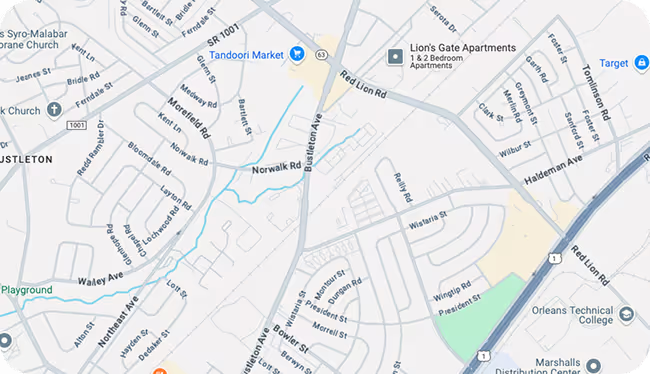
NE Philadelphia Location
Lower Gwynedd Location
Lower Gwynedd Township, PA 19002